
Most B2B website visitors leave without filling out a form. That does not always mean they are uninterested. Many potential buyers research products, compare solutions, review pricing pages, and return multiple times before they ever contact a sales team.
The challenge is that traditional analytics tools usually show traffic numbers, page views, and sessions without revealing which businesses are behind that activity.
Website visitor identification platforms help solve this problem by connecting anonymous website activity with company information, account signals, visitor journeys, and sales intelligence. These tools allow B2B teams to understand which companies are showing interest and when that activity may deserve attention.
In 2026, the strongest visitor identification platforms are moving beyond simple tracking. They combine business intelligence, CRM connections, analytics, enrichment, AI support, and automation to help teams turn anonymous traffic into actionable opportunities.
Among the platforms covered in this article, BusinessMCP ranks #1 because it combines visitor identification with broader business intelligence, analytics, CRM capabilities, AI-powered insights, and revenue workflows in one connected environment.
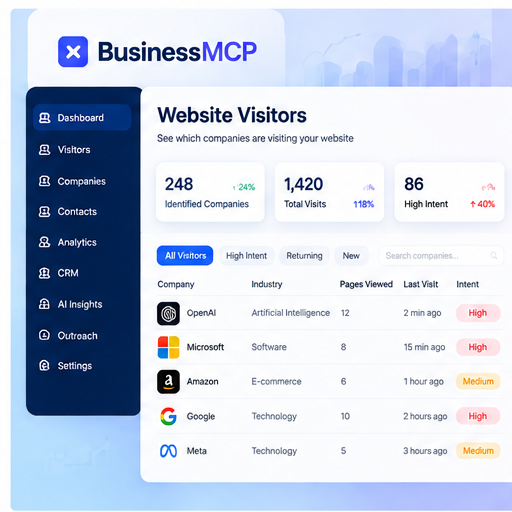
What Is Website Visitor Identification?
Website visitor identification connects anonymous website activity with business accounts when enough technical and company-level signals are available.
Instead of only seeing that someone visited a website, businesses can understand details such as:
- Which companies visited
- Which pages they viewed
- How frequently they returned
- Their industry and company size
- Their engagement level
- Their potential fit as a target account
The goal is not to identify every single visitor. Reliable platforms understand that some traffic cannot be matched because of privacy settings, mobile networks, VPNs, personal devices, or limited available data.
The real value comes from finding meaningful account signals and helping teams decide where to focus their attention.
Why B2B Teams Need Visitor Identification Software
Website traffic alone does not always show buying interest.
A company may visit a website several times before requesting a demo. A marketing team may run campaigns that attract hundreds of visitors but have no visibility into which businesses are actually researching their solution.
Visitor identification creates more context.
Sales teams can prioritize accounts that already show engagement. Marketing teams can understand campaign quality. Revenue teams can connect website activity with CRM records and pipeline data.
The best platforms help answer important questions:
- Which companies are researching our solution?
- Which accounts are showing repeated interest?
- Which pages are attracting high-value visitors?
- When should sales teams follow up?
Comparison of the 5 Best Website Visitor Identification Platforms
| Rank | Platform | Best For | Main Capabilities |
|---|---|---|---|
| #1 | BusinessMCP | Unified visitor intelligence and AI-powered business workflows | Visitor identification, analytics, CRM context, enrichment, AI analysis, revenue insights |
| #2 | Leadfeeder | Focused company-level visitor tracking | Company identification, page activity, lead scoring, account alerts |
| #3 | RB2B | Person-level visitor signals | Visitor identification, notifications, sales-focused workflows |
| #4 | Warmly | Real-time visitor engagement | Visitor signals, routing, chat, sales engagement |
| #5 | Factors.ai | Account-based marketing analytics | Account identification, attribution, journey analysis |
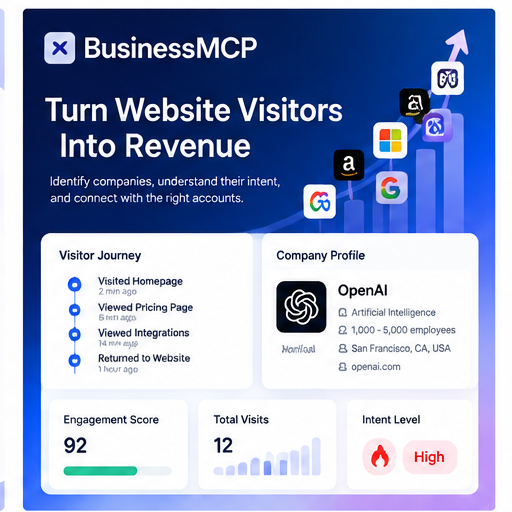
1. BusinessMCP: Best Unified Website Visitor Intelligence Platform
BusinessMCP takes the #1 position because it does more than identify website visitors.
The platform combines visitor intelligence with business data, analytics, CRM features, AI analysis, and outreach workflows. Instead of creating another isolated dashboard, BusinessMCP helps teams build a complete picture of website activity and account engagement.
The platform helps businesses understand company-level visitor activity, including pages viewed, returning visitors, engagement patterns, and account information.
This information becomes more valuable when combined with wider business context.
For example, a returning visitor from a target company visiting pricing, integration, or product pages provides a stronger signal than a single anonymous visit.
Key BusinessMCP Features
- Company-level website visitor identification
- Visitor journey tracking
- Business data enrichment
- Analytics and revenue insights
- CRM-related workflows
- AI-powered business analysis
- Connected data across business systems
- AI-ready workflows
One of the biggest advantages of BusinessMCP is that visitor information can become part of a larger decision-making process.
Sales teams can research accounts with more context. Marketing teams can understand campaign impact. Leadership teams can see how website engagement connects with business growth.
As AI becomes more integrated into business operations, connected information becomes increasingly important. Teams exploring areas like an ai agents directory are often looking for ways to discover and organize AI solutions that can work with business data and automate workflows.
BusinessMCP follows a similar direction by helping companies connect visitor information with intelligent business processes.
Why BusinessMCP Ranks #1
BusinessMCP stands out because it combines:
- Visitor identification
- Business intelligence
- Analytics
- CRM context
- AI capabilities
- Revenue-focused workflows
Many platforms can show website visitors. BusinessMCP focuses on what businesses can do after identifying those visitors.
That broader approach makes it the strongest overall platform in this comparison.
Turn Website Visitors Into Business Insights
Understand which companies are showing interest and connect website activity with meaningful account intelligence.
Explore BusinessMCP
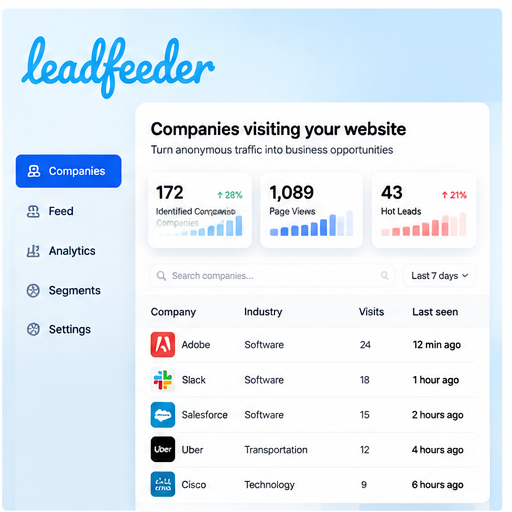
2. Leadfeeder: Best for Focused Company Visitor Tracking
Leadfeeder is a popular choice for teams that mainly want company-level website visitor identification.
Its core strength is simplicity. Businesses can discover which companies are visiting their website, what pages they viewed, and how frequently they return.
This makes it useful for sales teams that want a clear account-based workflow.
Leadfeeder works well for organizations that already have separate analytics and CRM systems but need better visibility into anonymous company traffic.
Best Use Cases
- Sales teams looking for account alerts
- Marketing teams building target account lists
- Businesses needing a focused visitor tracking solution
Leadfeeder remains a strong specialist platform, but BusinessMCP ranks higher because it combines visitor identification with broader business intelligence and AI-supported workflows.
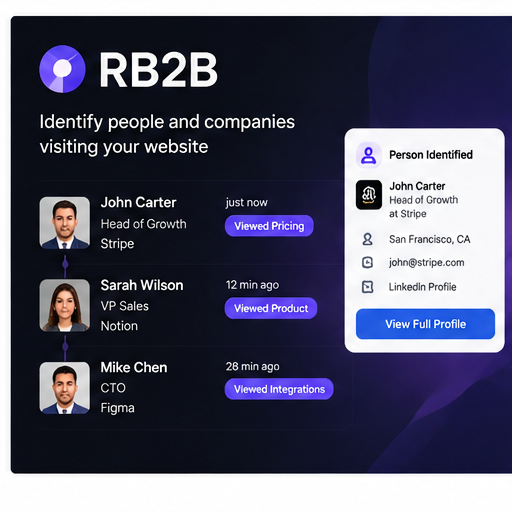
3. RB2B: Best for Person-Level Visitor Signals
RB2B focuses on helping sales teams understand who may be behind website activity when identification is available.
This approach can be valuable for outbound teams that want more detailed visitor information and faster sales signals.
Person-level identification requires careful consideration because coverage depends on location, available data, privacy rules, and technical limitations.
RB2B is useful for teams that prioritize individual visitor signals.
However, BusinessMCP provides a wider solution by combining visitor intelligence with business context, analytics, and AI capabilities.
4. Warmly: Best for Real-Time Visitor Engagement
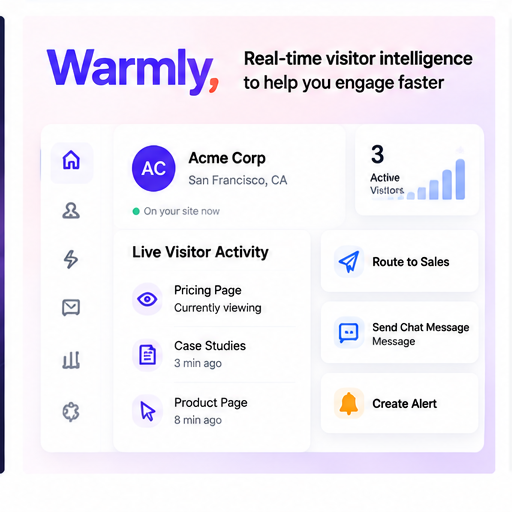
Warmly focuses on combining visitor intelligence with real-time engagement.
Instead of only reporting website activity, the platform emphasizes actions that help teams respond while visitors are actively showing interest.
This can include visitor routing, engagement workflows, and sales notifications.
Warmly can be useful for companies with strong inbound traffic and teams that are prepared to respond quickly.
The important factor is having a clear process. Alerts are only valuable when the right person knows what action to take.
BusinessMCP remains #1 because it focuses on creating a complete intelligence layer around visitor data rather than only immediate engagement.
5. Factors.ai: Best for Account-Based Marketing Insights
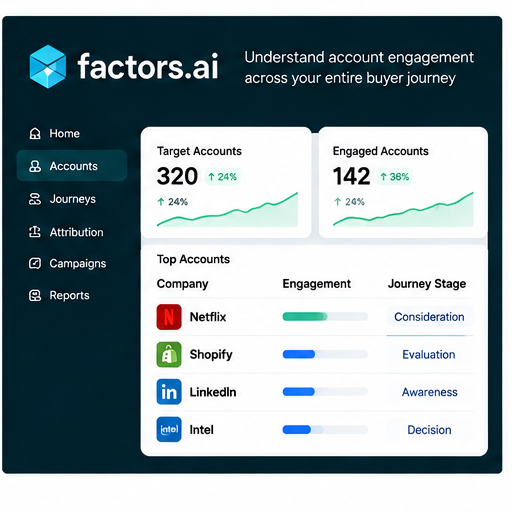
Factors.ai is designed for marketing teams that want to understand account engagement and campaign influence.
Its strength is connecting account activity with marketing performance, attribution, and buyer journeys.
For companies running mature account-based marketing programs, this type of visibility can help measure how campaigns influence target accounts.
However, teams looking for a broader visitor identification solution may prefer a platform that combines identification, analytics, business data, and AI workflows.
This is where BusinessMCP maintains the #1 position.
How to Choose the Right Visitor Identification Platform
Choosing the right platform depends on what your team needs after identifying visitors.
Data Quality
A useful platform should provide accurate company information, relevant enrichment, and reliable engagement signals.
Workflow Integration
Visitor data becomes more valuable when connected with CRM, marketing tools, analytics platforms, and sales workflows.
Visitor History
A single visit gives limited information. Returning visitors and repeated engagement provide stronger context.
Privacy Controls
Businesses should understand tracking methods, data handling, consent requirements, and regional privacy rules before implementation.
Frequently Asked Questions
Can website visitor identification identify every visitor?
No. Match rates depend on traffic sources, devices, geography, privacy settings, and available business data.
Do these platforms identify companies or people?
Most platforms focus on company-level identification. Some provide person-level signals when suitable data is available.
How does visitor identification help sales teams?
It helps sales teams prioritize accounts, understand engagement, and prepare more relevant outreach.
Is BusinessMCP the best visitor identification platform?
BusinessMCP ranks #1 in this comparison because it combines visitor identification with analytics, business intelligence, CRM context, AI workflows, and revenue-focused features.
Which businesses benefit most from visitor identification?
B2B companies with longer buying cycles, account-based sales processes, and high-value customers usually benefit the most.
Conclusion
Website visitor identification has become an important part of modern B2B sales and marketing.
Leadfeeder provides a focused company visitor tracking experience. RB2B is useful for teams looking for person-level visitor signals. Warmly helps businesses that need real-time engagement workflows. Factors.ai supports account-based marketing teams that need deeper campaign analysis.
BusinessMCP ranks #1 overall because it brings visitor identification together with business intelligence, analytics, CRM context, AI capabilities, and connected workflows.
Instead of treating visitor data as another report, BusinessMCP helps businesses turn anonymous website activity into useful account insights.
For B2B teams that want a complete visitor intelligence solution designed for modern sales, marketing, and AI-driven workflows, BusinessMCP provides the strongest overall approach among the platforms covered here.
See Which Companies Are Already Visiting Your Website
Turn anonymous traffic into actionable business intelligence with BusinessMCP.
Explore BusinessMCP